

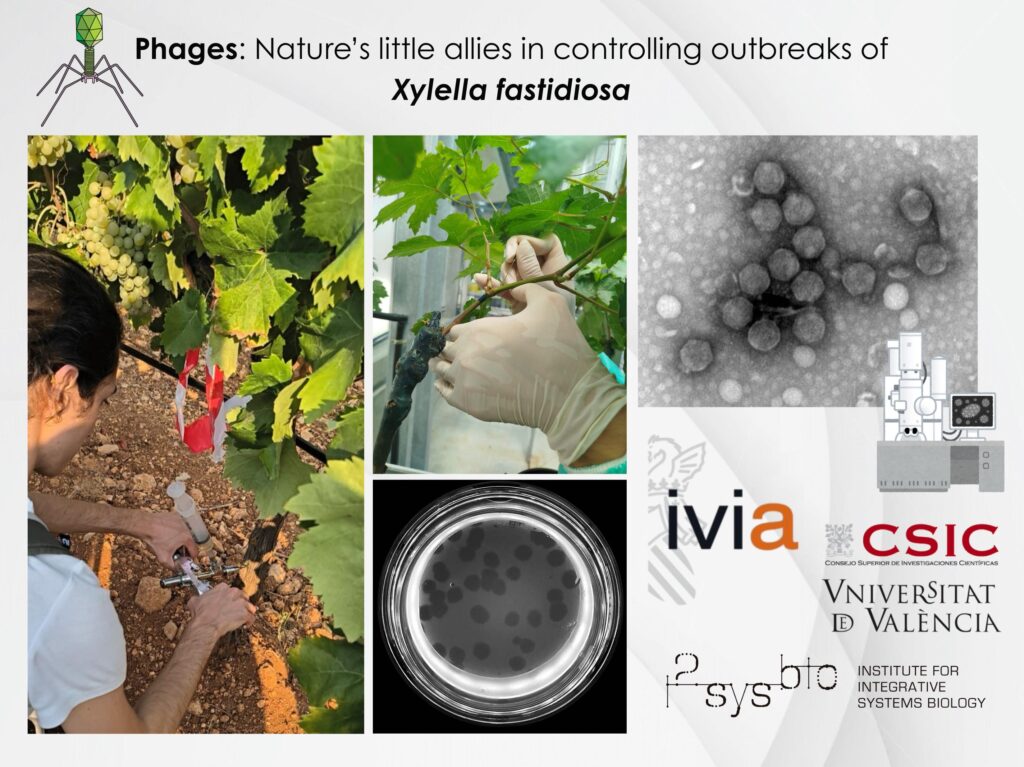
Bacteriophages, also known as phages, are viruses that infect bacteria and sequester the host cell’s machinery to replicate, often leading to the destruction of the host. These bacterial predators emerge as a promising tool in the fight against plant pathogenic bacteria due to their high specificity and low environmental impact, making them a sustainable alternative to traditional bactericidal treatments.
In Spain, researchers from the IVIA Bacteriology team, led by Dr. Ester Marco-Noales, and the I2SysBio Environmental and Biomedical Virology team (University of Valencia), led by Dr. Pilar Domingo-Calap, are working together in a coordinated effort to find phages capable of targeting Xylella fastidiosa.
As part of their work, the researchers took samples of soils, plants, and water sources across the Valencian Community to find naturally occurring phages capable of infecting not only X. fastidiosa, but also other harmful plant pathogens such as Xanthomonas oryzae and X. citri. A key aspect of their research was to test whether these phages could act against strains of X. fastidiosa representative of outbreaks in Spain. Under laboratory conditions, several phages completely inhibited bacterial growth of these strains, highlighting their potential as biocontrol agents.
Not all phages are suitable for agricultural use. Ideal candidates must be strictly lytic, meaning that during their life cycle they destroy their host without integrating their genome into the bacterial DNA. Genetic analysis confirmed that the phages isolated in this research are strictly lytic and do not contain genes linked to virulence or antibiotic resistance, making them safer candidates for application in real-world conditions.
As research progresses, phage-based products could soon become a powerful, eco-friendly alternative to chemical treatments, helping to protect crops while preserving environmental and microbial balance.