

Did you know that some bacteria could become our greatest allies in protecting crops, promoting plant health and growth, and combating devastating pathogens?
In recent years, interest in plant health has grown significantly, particularly in the field of biological control of plant pathogens and pests Research is now delving into the plant microbiome’s influence on disease resistance and, in unique cases such as Xylella fastidiosa, exploring the microbiome of insect vector mouthparts (e.g., Philaenus spumarius) as a potential strategy for biocontrol.
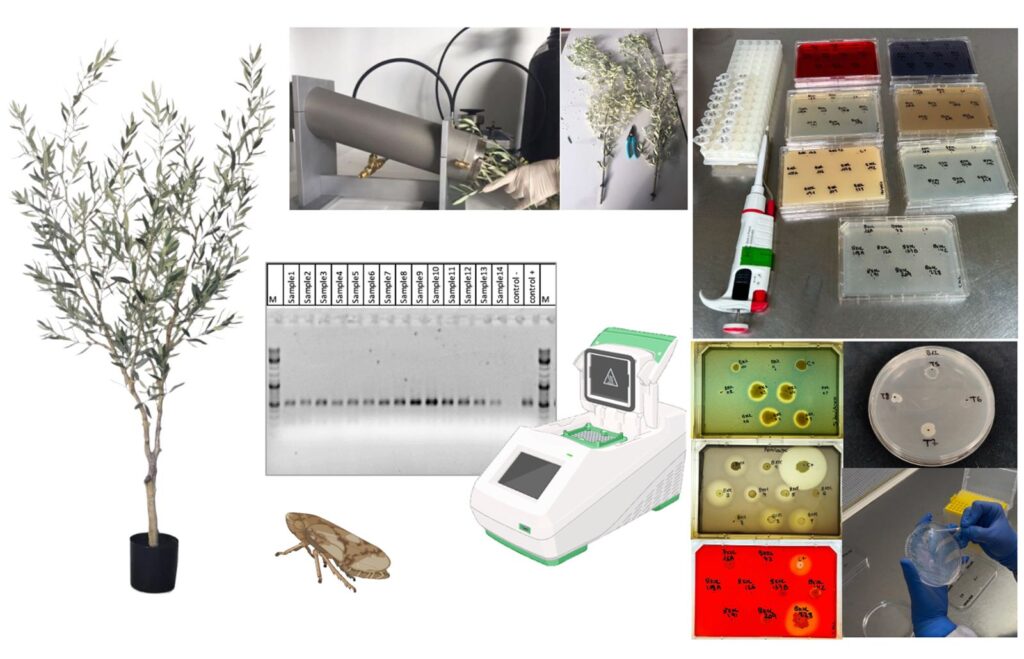
At the research group “Phytopathology of Sustainable Agricultural Systems” at the Institute for Sustainable Agriculture (IAS-CSIC) in Córdoba, we’re on a quest to uncover these “superpowered” bacteria. Our journey—rich in both challenge and discovery—has led us to isolate and characterize hundreds of bacterial strains from two critical niches: the mouthparts of insect vectors and the xylem of host plants. Our singular goal is to pinpoint those microorganisms with true biocontrol potential against Xylella fastidiosa. To achieve this, we combine two key strategies
- Genomics: Deciphering bacterial genomes to predict key functional traits.
- Culture-based assays: Testing each isolate under laboratory conditions to characterize and validate their biocontrol functional traits.
These bacteria were subjected to rigorous testing to evaluate their resistance to environmental stress factors such as acidic pH, high salinity, and the presence of antibiotics. We also assessed their ability to metabolize a variety of carbon sources, offering insights into their ecological versatility and adaptability.
Most excitingly, some strains demonstrated the ability to inhibit the growth of Xylella fastidiosa. Others showed strong bio-stimulant potential, producing beneficial compounds such as indole-3-acetic acid, siderophores (which scavenge iron from the environment), and even fixing atmospheric nitrogen—a key nutrient for plant development.
As an added bonus, many of these bacteria also produce antimicrobial enzymes—such as amylases, chitinases, and proteases—that could be applied in the natural biocontrol of plant diseases, helping to reduce dependence on chemical inputs.
In short, our work is revealing an untapped arsenal of microbial allies. These bacteria, until recently have remained overlooked, and now they are ready to become key drivers of truly sustainable agriculture.