Workshop on Remote sensing approaches for stress detection in vegetation

Workshop on Remote sensing approaches for stress detection in vegetation

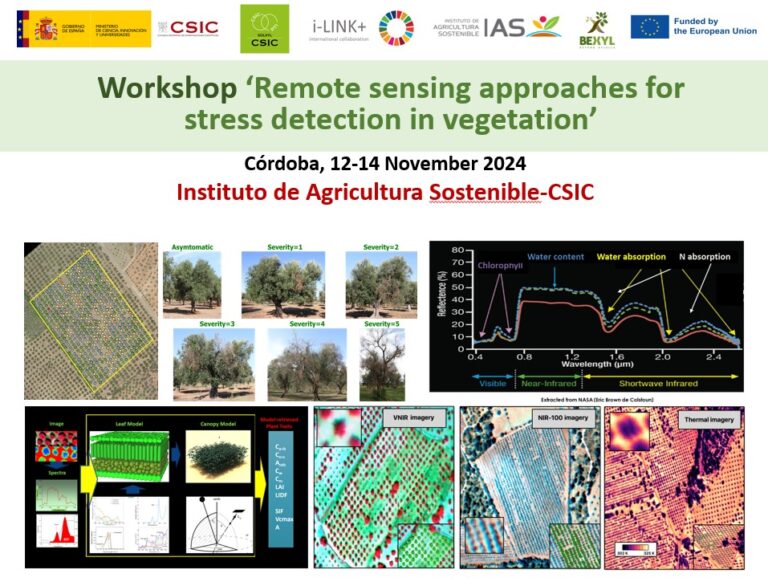
A “Workshop on Remote sensing approaches for stress detection in vegetation” organised by the Instituto de Agricultura Sostenible (CSIC) within the I-link program (ILINK22052) with the collaboration of @BeXylproject and the support of @PTI_SolXyl. he workshop will be held in person at the Institute of Sustainable Agriculture (IAS) in Córdoba, Spain from 12 to 14…

The research centers IVIA, IAS-CSIC, and UdG are conducting pathogenicity assays of Xylella fastidiosa in forest plants

The research centers IVIA, IAS-CSIC, and UdG are conducting pathogenicity assays of Xylella fastidiosa in forest plants

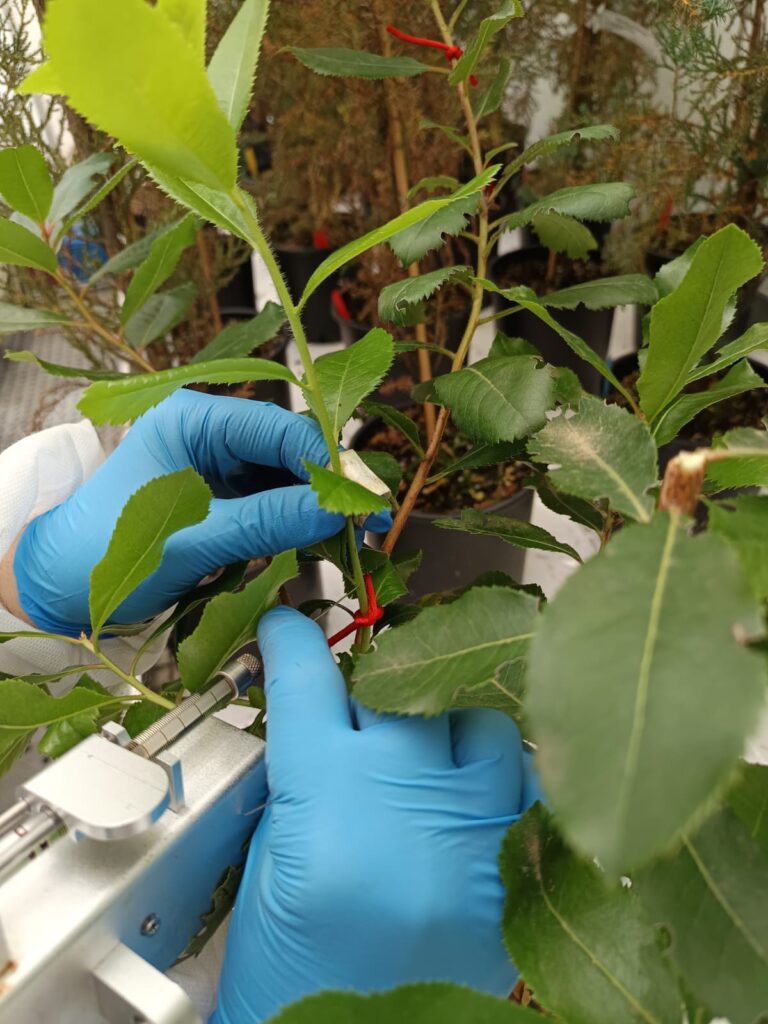
As part of the BioStop-Xf project, the Valencian Institute of Agricultural Research (IVIA), the Institute for Sustainable Agriculture of the Spanish National Research Council (IAS-CSIC), and the University of Girona (UdG) began pathogenicity tests on Xylella fastidiosa in forest plants last May, focusing on cork oak, holm oak, ash, arbutus, and juniper trees among other….

Xf erradication program activated in Extremadura (Spain)

Xf erradication program activated in Extremadura (Spain)

The recent detection of a new outbreak of Xylella fastidiosa (Subsp. fastidiosa) in Valencia de Alcántara, Spain, has prompted the Junta de Extremadura to activate the eradication program. In line with the Ministry of Agriculture’s Contingency Plan, authorities have designated infected and buffer zones, removed host and susceptible plants, and applied insecticide treatments to control…

1st European EPG Workshop held in Madrid, Spain (June, 2024)

1st European EPG Workshop held in Madrid, Spain (June, 2024)

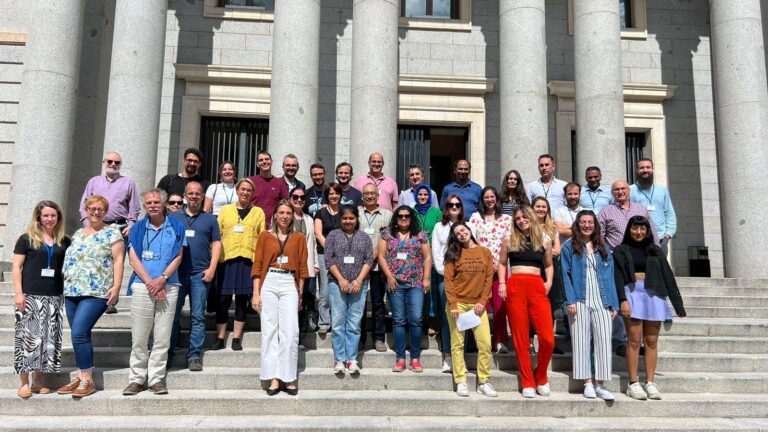
This exciting and successful international Workshop was held in Madrid Spain on June 16-19, 2024 at the Institute of Agricultural Sciences (ICA) that belongs to the Spanish Research Council (CSIC). The Workshop was attended by more than 40 participants from several different countries from Europe, America and Australia. It was the first formal European Workshop,…

Controlled inoculation trials of Xylella fastidiosa conducted by the Plant Pathology research group at the University of Girona

Controlled inoculation trials of Xylella fastidiosa conducted by the Plant Pathology research group at the University of Girona

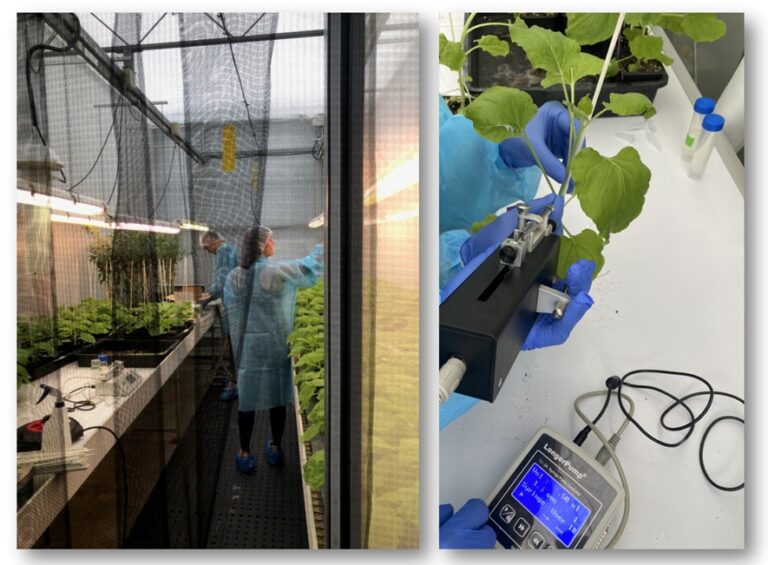
The Plant Pathology research group at the University of Girona, led by Professor Emilio Montesinos, has made significant contributions to the field of epidemiology and control of Xylella fastidiosa. Over the past six years, the group has focused on developing an in planta platform using microinjection to evaluate strain virulence and the efficacy of chemical…

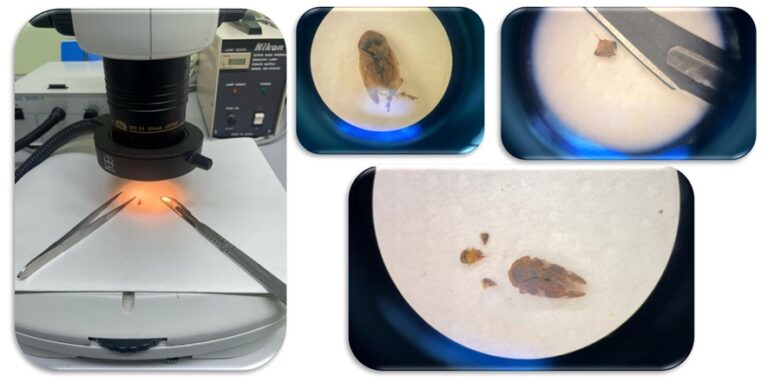
Proccess of cutting the foregut of Philaenus spumarius, vector of Xylella fastidiosa

Proccess of cutting the foregut of Philaenus spumarius, vector of Xylella fastidiosa

Xylella fastidiosa needs to be inoculated into xylem vessels through an insect vector to access the plant’s xylem. Within the Auchenorrhyncha suborder of Hemiptera, various insects can successfully act as vectors for Xylella fastidiosa, with geographical variations in this role. In the Mediterranean regions of Europe, the spittlebug Philaenus spumarius, a member of the Aphrophoridae…

Inoculation with Xylella fastidiosa in almond plants conducted by the University of Girona

Inoculation with Xylella fastidiosa in almond plants conducted by the University of Girona

The Plant Pathology and Microbiology group at the Institute of Agri-Food Technology of the University of Girona, led by Dr. Emilio Montesinos, is conducting the selection of natural and synthetic functional peptides against the subspecies of Xylella fastidiosa (Xf) within the context of the Biostop-Xf project. The objective is to find a potential tool capable…

Evolving Therapeutics aplica de forma pionera virus de bacterias contra Xylella fastidiosa en las Islas Baleares

Evolving Therapeutics aplica de forma pionera virus de bacterias contra Xylella fastidiosa en las Islas Baleares

Los fagos, los virus que infectan de manera exclusiva a las bacterias, pueden jugar un papel clave en la salud del campo. Pilar Domingo-Calap, investigadora del Instituto de Biología Integrativa de Sistemas (I2SysBio), centro mixto de la Universitat de València (UV) y del Consejo Superior de Investigaciones Científicas (CSIC), dirige una investigación con estos virus que ha…