Xylella fastidiosa is a bacterial pathogen that lives inside the xylem vessels of plants, which are the internal channels responsible for conducting water and nutrients. In crops like olive, grapevine, and almond, its presence can lead to serious diseases with devastating economic and environmental consequences.
Because X. fastidiosa resides deep within the plant’s vascular system, it’s challenging to study how this bacterium behaves under real-life conditions, especially when researchers want to test new biocontrol strategies, like the biological tools being developed within the BIOSTOP-XF project.
Traditional microbiology and molecular techniques offer valuable insights, but they don’t fully replicate the conditions inside the xylem such as continuous fluid flow and internal pressure. So, how can we mimic this hidden environment in the lab?
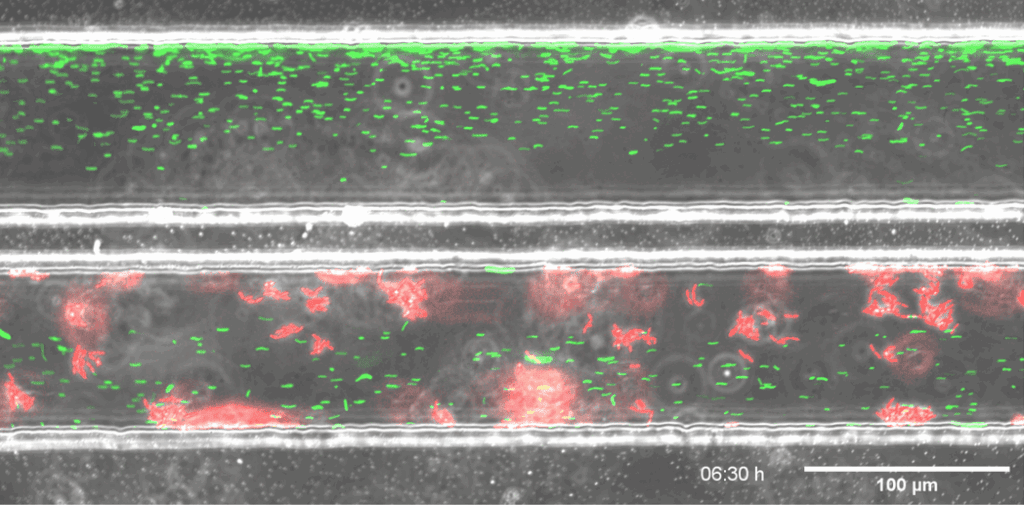
Microfluidic chambers are miniature experimental platforms that allow scientists to precisely control the movement of tiny fluid volumes through microscopic channels effectively simulating the inside of a plant’s xylem vessel. These devices are typically made of transparent materials such as glass, silicon, or flexible polymers like PDMS. They contain microchannels connected to inlet and outlet ports, which can be attached to syringes controlled by micro-pumps. By adjusting the speed and pressure of the flow, researchers can recreate the hydraulic conditions found inside a plant’s vascular system. This setup makes it possible to observe how X. fastidiosa behaves under xylem-like conditions and how it responds when exposed to candidate biological control agents including functional peptides, beneficial bacteria, or bacteriophages.
By using microfluidic chambers, researchers can monitor biofilm formation, bacterial movement, and interactions in real time, all under conditions that closely mimic the natural environment inside the plant. This allows for more accurate testing of potential treatments before moving on to greenhouse or field experiments.
Thanks to the use of these high-precision tools, BIOSTOP-XF will allow us to get closer to understanding how to fight against X. fastidiosa.