Functional peptides are emerging as promising candidates in the fight against Xylella fastidiosa. These small molecules often display strong antibacterial and antibiofilm activity, low toxicity, and are biodegradable, meaning they break down naturally without persisting in the environment. Even better: it’s difficult for pathogens to develop resistance against them, since peptides often act through multiple mechanisms. Some can even trigger the plant’s own immune system, acting as defense elicitors to help protect against infection.
Within the BIOSTOP-XF project, researchers at the “Center for Innovation and Development in Plant Health (CIDSAV)” at the University of Girona (UdG) are exploring the potential of these peptides as sustainable disease control tools.
But before peptides can be used in real-world conditions, scientists must answer an important question: Are they safe for the plants themselves?
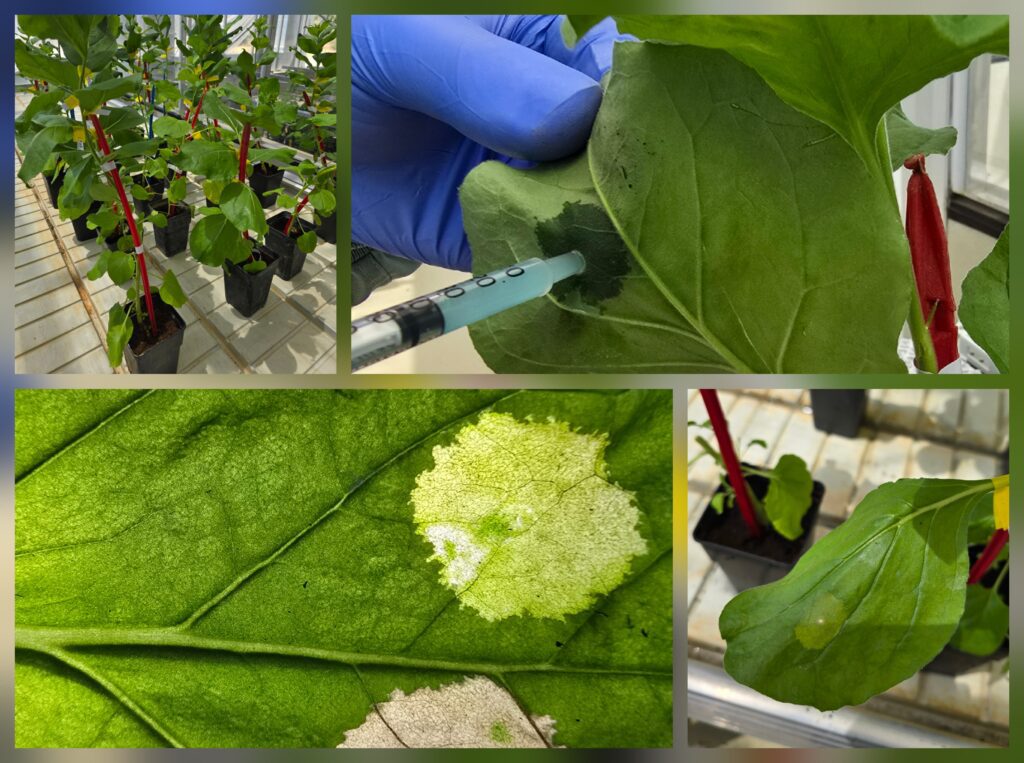
To find out, researchers turned to a model plant, Nicotiana benthamiana, a relative of tobacco, to test for possible phytotoxicity. As shown in the images, candidate peptides are infiltrated into the leaves of the plant, which is then kept under standard greenhouse conditions for two days. If a peptide causes damage, it produces a translucent lesion on the leaf as shown in the bottom left image, a clear sign of phytotoxicity. The size of the lesion is measured and compared to known reference compounds to assess how harmful the peptide may be to the plant.
This approach helps researchers filter out peptides that could harm plant hosts in future experiments. Those that show signs of toxicity can be redesigned to reduce its phytotoxic activity, while the most promising plant-friendly peptides can move forward in development.
By identifying peptides that are both effective against X. fastidiosa and safe for the plant, researchers are taking a vital step toward developing eco-friendly solutions to protect crops and reduce dependence on chemical pesticides.