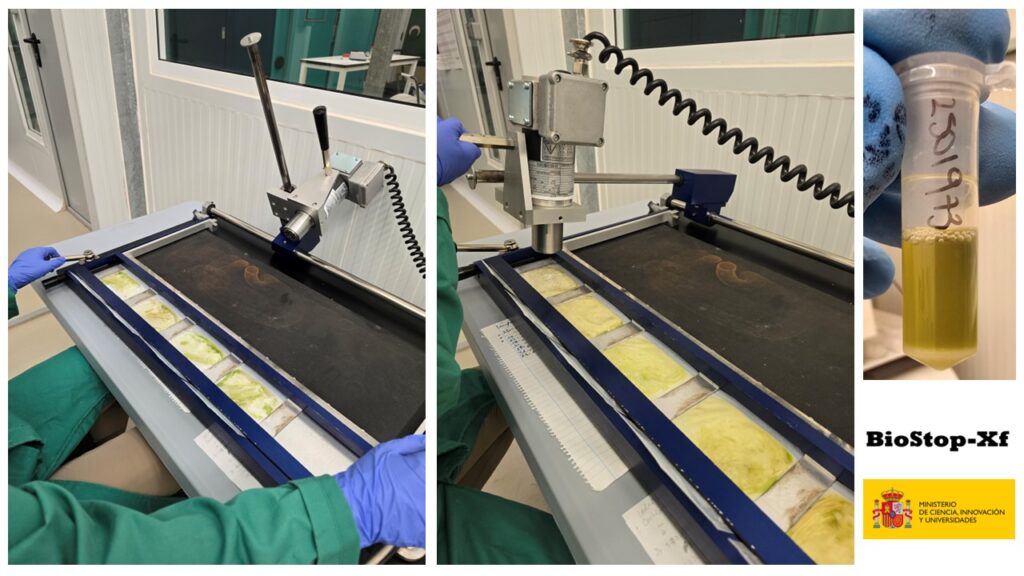
How do we evaluate the effect of beneficial bacteria on Xylella fastidiosa, a pathogen that resides deep within plant xylem? Simple: we crush the stem.
In the latest BIOSTOP-XF experiments, researchers from the “Phytopathology of Sustainable Agricultural Systems” group at the Institute for Sustainable Agriculture (IAS-CSIC, Córdoba, Spain) are using DNA-based assays to track the infection dynamics of this priority pest Xylella fastidiosa in plants treated with promising biocontrol bacteria.
In the featured video, you’ll see olive stems homogenized in an extraction buffer. This mechanical disruption breaks open the xylem tissue, so we can recover DNA from Xylella fastidiosa and other microbes inhabiting the xylem vessels. By isolating and quantifying this bacterial DNA and applying targeted molecular diagnostic tools, we can track how the pathogen spreads and persists within the plant under different experimental conditions.
Some of those olive plants were inoculated with beneficial bacterial strains—isolated from olive xylem and selected for multiple biocontrol-associated traits—as part of the BIOSTOP-XF project. Some of those beneficial microbes exhibit key biocontrol-relevant traits: they tolerate harsh conditions (low pH, high salinity, and exposure to selected antibiotics), produce plant growth–promoting factors such as indole-3-acetic acid (IAA) and siderophores, show evidence of nitrogen-fixation capacity, and many display antimicrobial activity—including direct inhibition of Xylella fastidiosa under laboratory experimental conditions.
Now these bacteria are being tested in planta. By quantifying Xylella fastidiosa DNA in olive plants co-inoculated with beneficial strains and comparing it with pathogen-only and mock (sterile-medium) control plants, researchers can determine whether the beneficials limit the pathogen’s ability to colonize xylem vessels.
This study builds on prior BIOSTOP-XF work to isolate, characterize, and validate olive xylem–associated microbes as sustainable biocontrol management tools. Together, these efforts aim to protect key Mediterranean crops—especially olive groves—from the damage caused by X. fastidiosa.
More soon from BIOSTOP-XF, as we turn stem-smash science into insights—one crushed stem at a time!